You don't always need to route your entire internet connection through a VPN. Sometimes it's enough to send just a handful of sites through a secure tunnel and let everything else connect directly. That's exactly what a site whitelist is for.
This approach keeps your internet at full speed, reduces the load on your VPN, and still gives you access to exactly the resources that actually need one.
What a site whitelist is
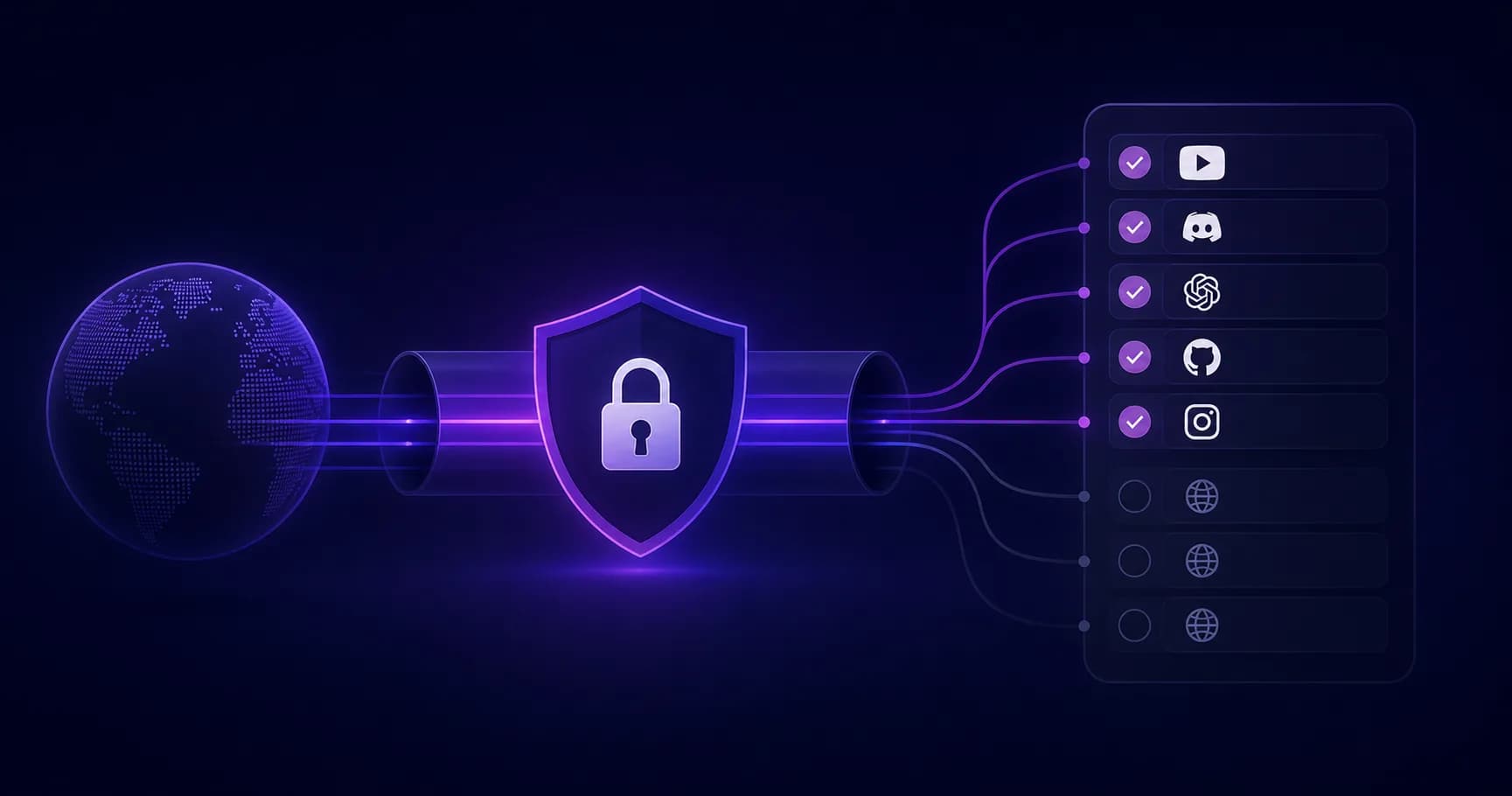
A whitelist is a list of domains or sites that will be opened through the VPN, while everything else continues to run over your regular ISP connection.
For example, you might add to the list:
- YouTube
- Discord
- ChatGPT
- GitHub
Everything else — banking services, local online stores, government portals, and other domestic sites — keeps working directly, with no VPN involved.
A whitelist follows one simple rule: "use the VPN only where it's actually needed." It's one of the most convenient ways to run a VPN day to day.
How whitelisting works
When an app tries to open a site, the VPN client first checks whether that domain is on the whitelist.
If the site is on the list:
- the connection goes through the VPN;
- it uses the VPN server's IP address;
- the traffic is encrypted.
If it isn't:
- the connection goes directly through your ISP;
- the VPN isn't used at all;
- your speed stays as high as possible.
From the user's side, this all happens automatically — there's no need to manually switch between the VPN and your regular connection.
When you should use a whitelist
To reach blocked sites
This is the most common use case.
You route only the services that are inaccessible without a VPN:
- YouTube;
- Discord;
- ChatGPT;
- GitHub;
- Instagram;
- X (Twitter).
Every other site keeps working directly.
When speed matters most
Routing all your traffic through a VPN always adds a bit of overhead.
With a whitelist, only a portion of your connections go through the VPN, so:
- pages load faster;
- there's less load on your device;
- you use less of the VPN server's bandwidth.
For online banking
Some banking apps and websites either require a connection from your home country or simply behave more reliably without a VPN.
A whitelist lets you use the VPN only for the services that need it, without interfering with your banking apps.
Advantages of whitelisting
The main benefits of using a whitelist:
- faster internet overall;
- less load on the VPN;
- lower resource usage on your device;
- automatic traffic routing;
- more convenient for everyday use.
Once it's set up, most users barely notice the VPN is running at all.
If you only use a VPN for a handful of international services, a whitelist is usually the most convenient way to run it.
Whitelist vs. full VPN
With a full VPN:
- all your internet traffic goes through the VPN;
- every site sees the same IP address;
- the entire connection is encrypted.
With a whitelist:
- only selected sites go through the VPN;
- everything else uses your regular connection;
- the internet feels faster since less traffic needs to be encrypted.
Which one to choose depends on what you need. If you want full privacy across the board, route all your traffic through the VPN. If you just need to reach a handful of specific services, a whitelist will be noticeably more convenient.
Are there any limitations
Whitelisting works well for most popular sites, but some services load resources from a large number of additional domains.
For instance, a single site might pull images, video, and API calls from several different addresses. If some of those domains aren't added to the list, certain features may not work correctly.
That's why modern VPN clients typically make it easy to edit your whitelist and add new domains whenever you need to.
Conclusion
A site whitelist is a convenient way to run a VPN, using an encrypted connection only where it's genuinely needed. It keeps your internet fast, automatically routes the right services through the VPN, and avoids sending all your traffic through a tunnel unnecessarily.
For most people who only need access to a few international sites and services, whitelisting is one of the most practical and convenient ways to use a VPN.